Salt Glaze
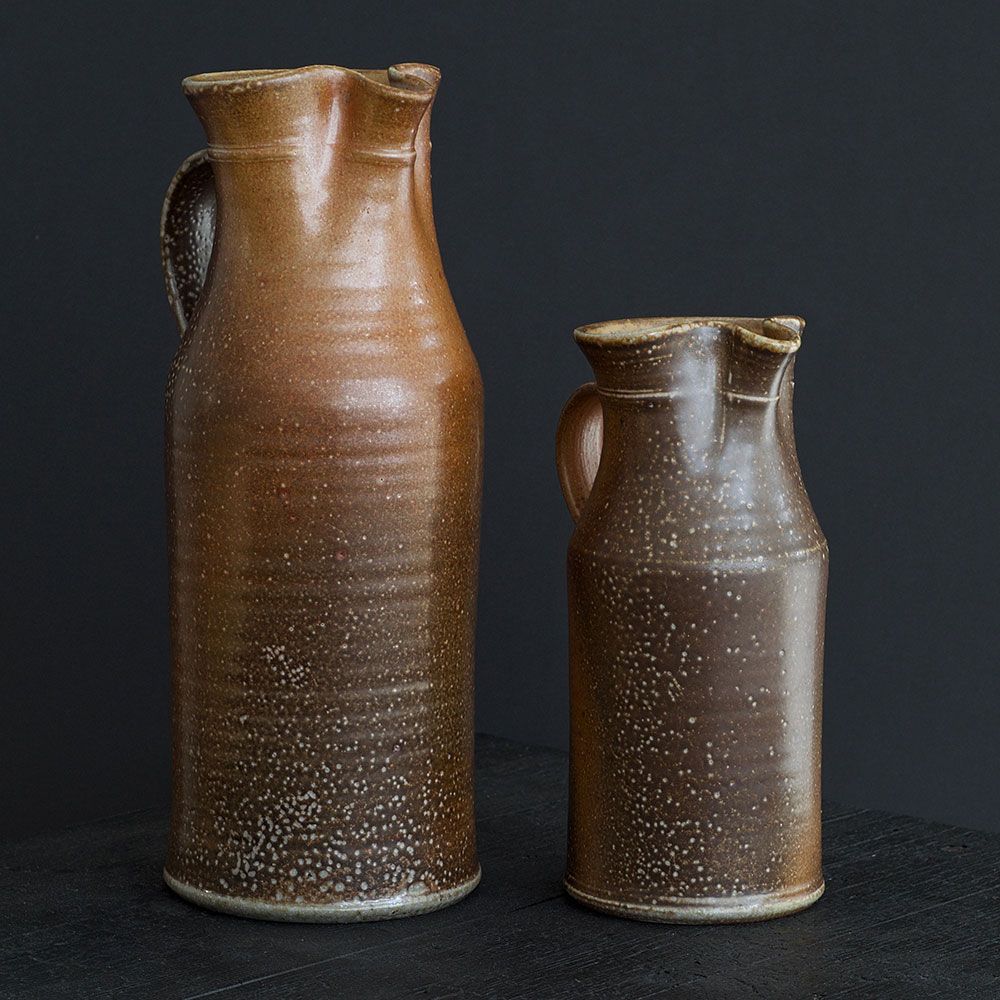
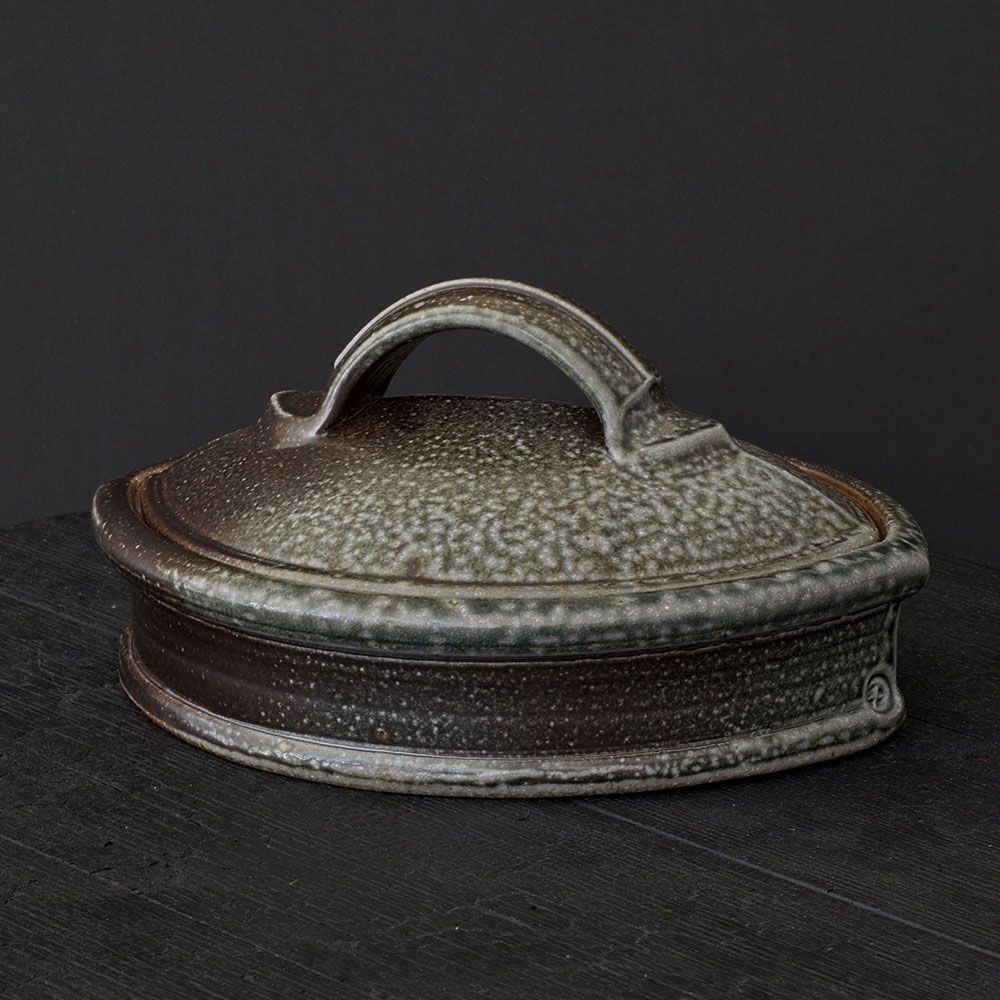
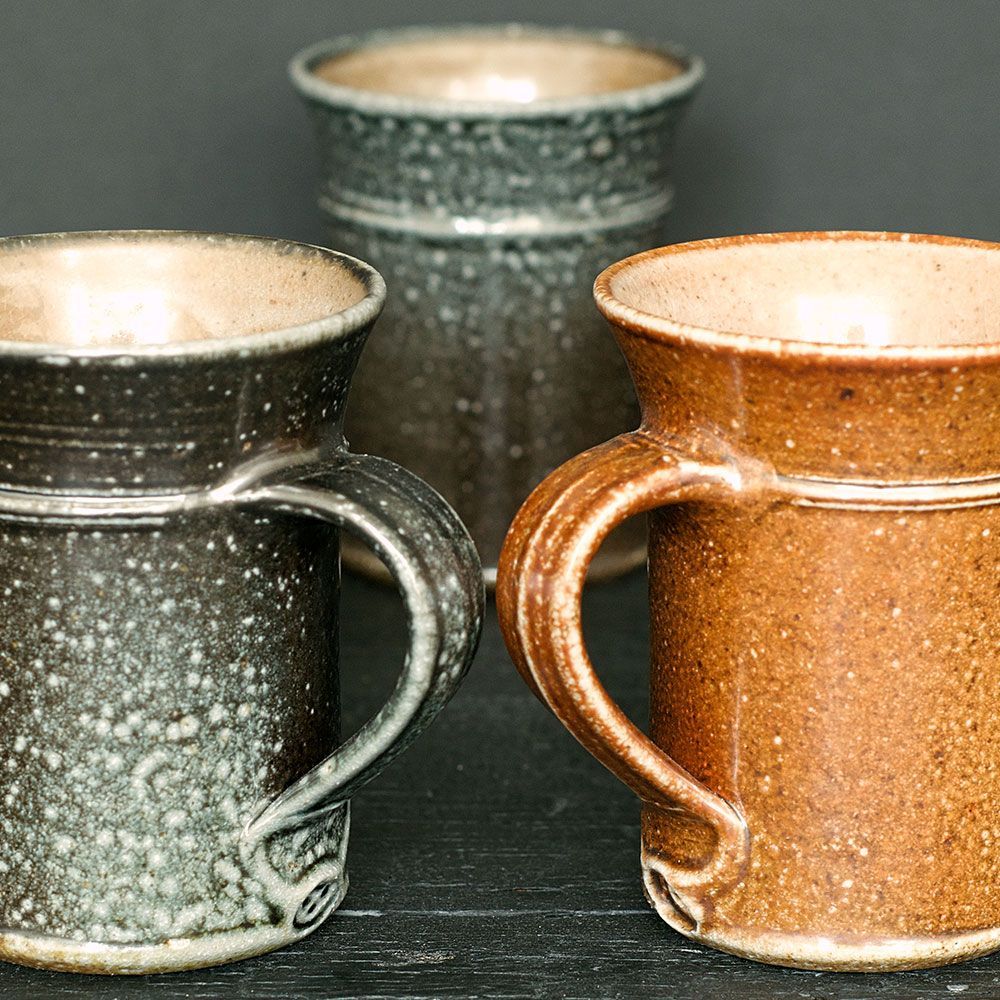
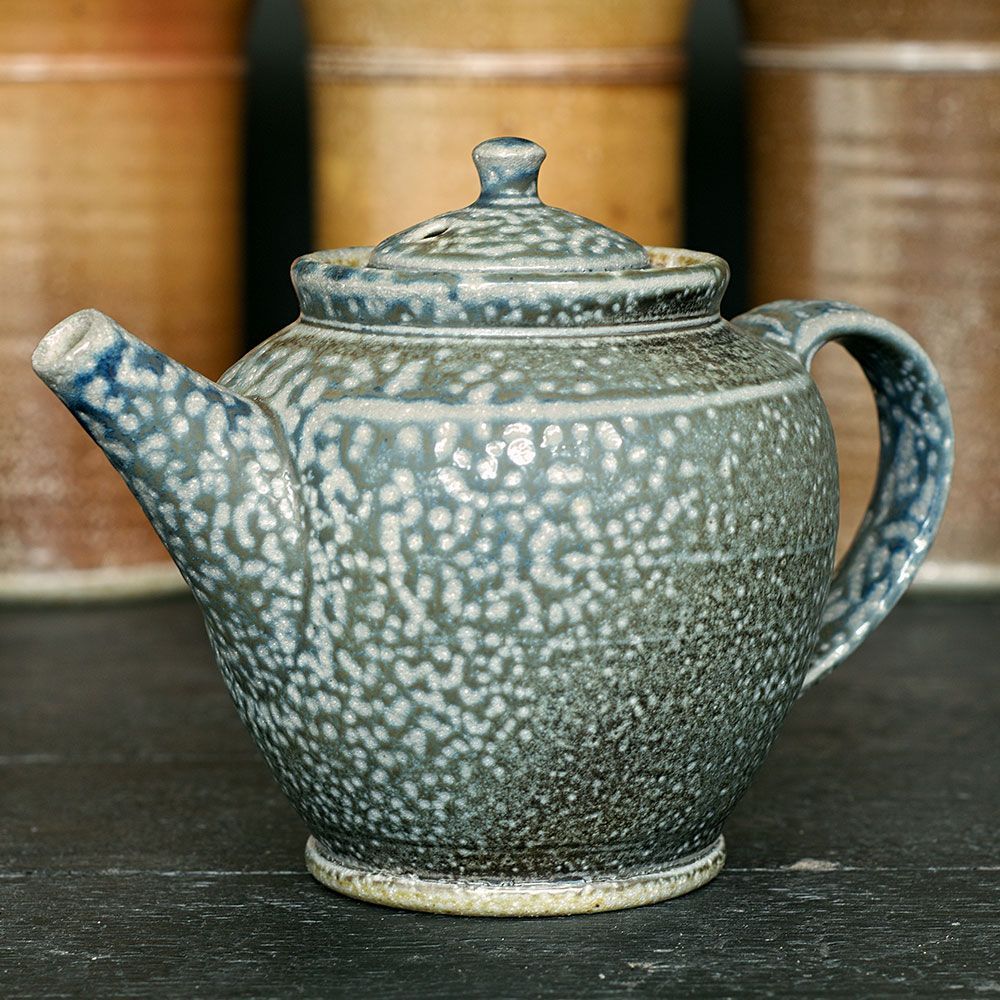
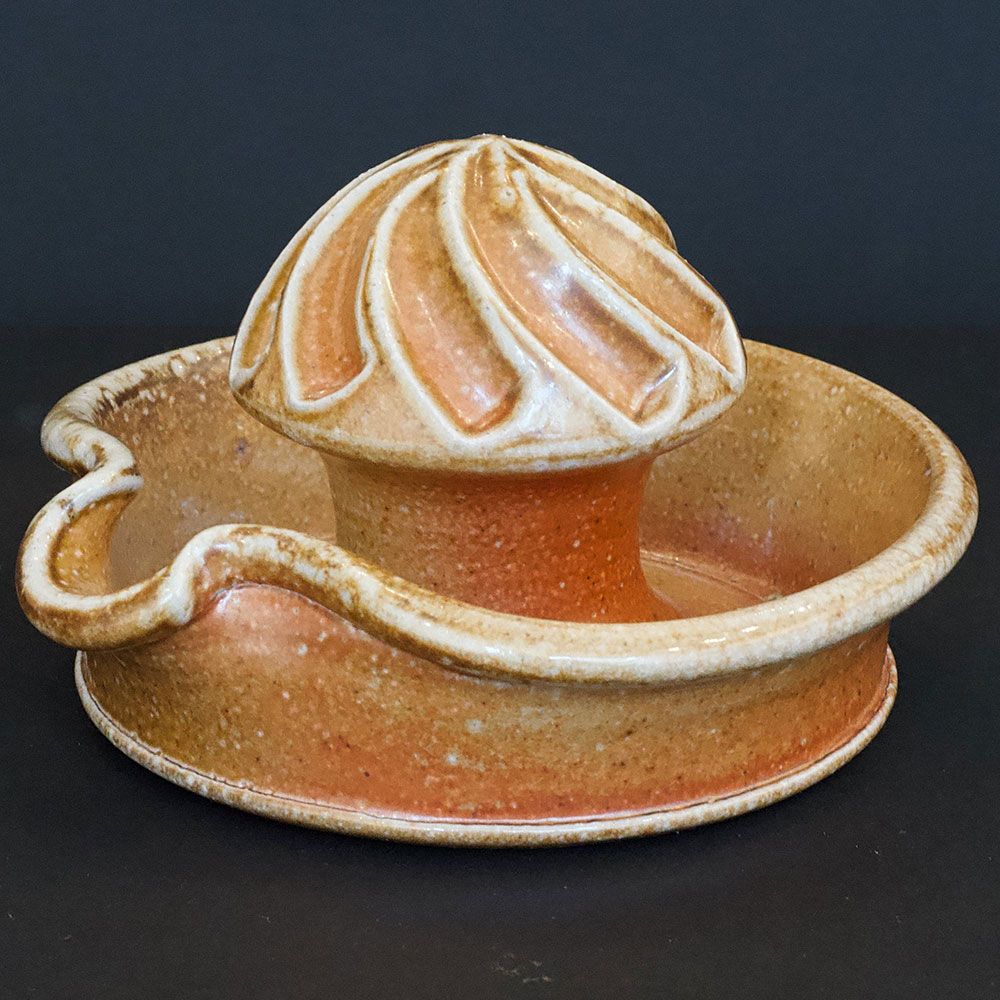
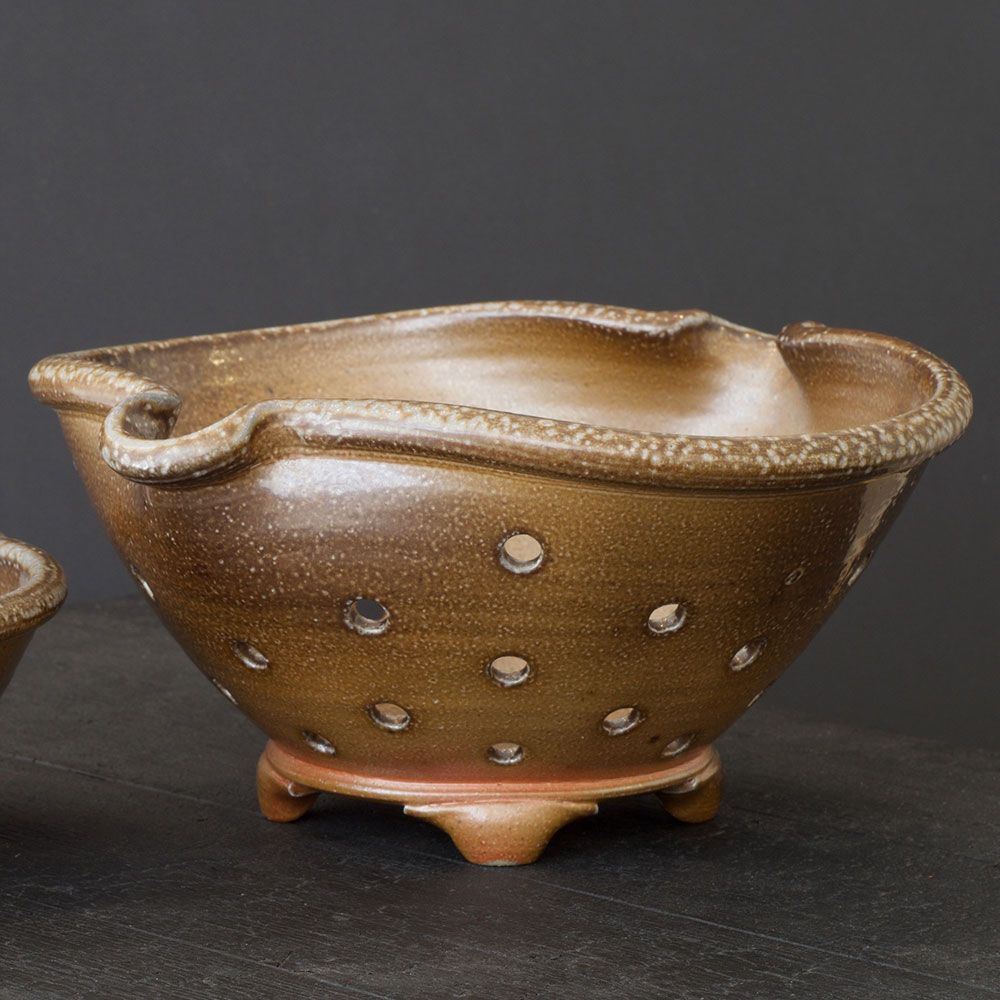
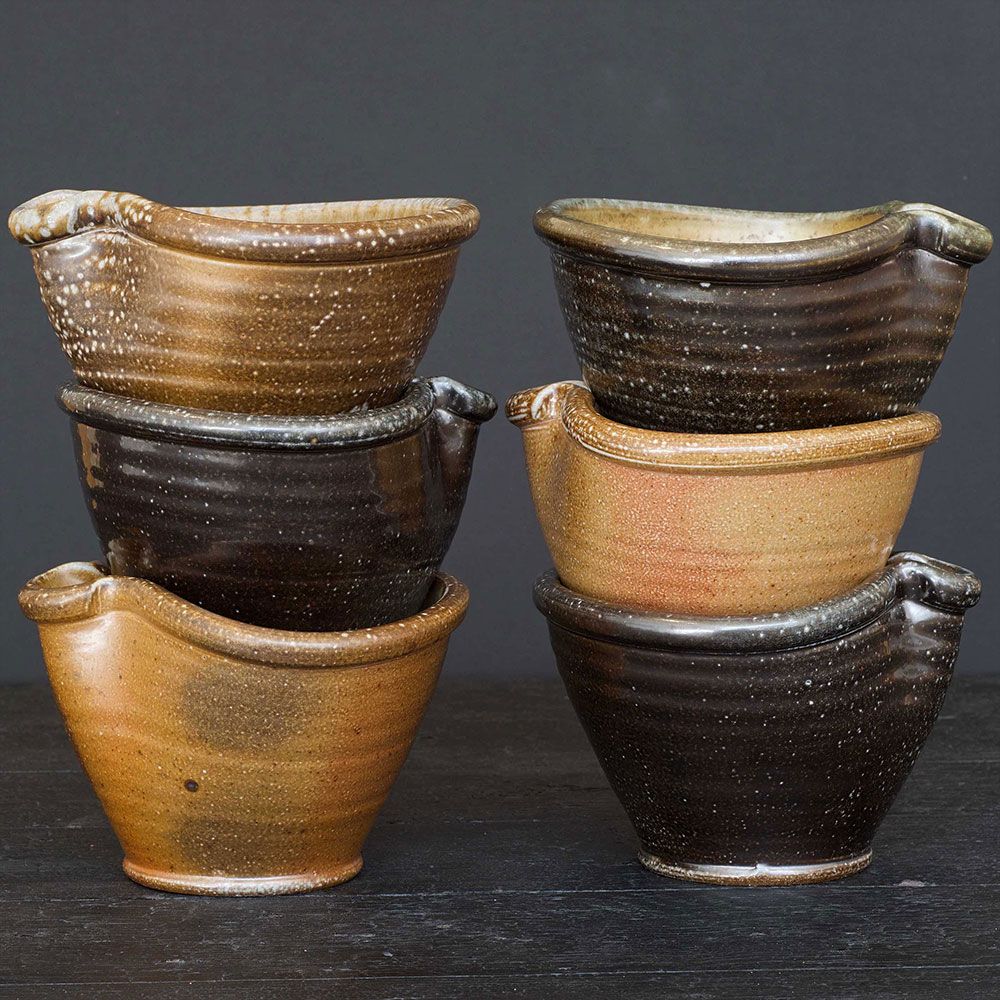
My work focuses on simplicity of form and the relationship between the object and its intended purpose. Working predominantly in stoneware and on the potter’s wheel, I create calm, understated pieces for use in the kitchen or on the table. These principles of form and function have informed my creative practice throughout my career and continue to define and inspire its continued evolution.
I have been fascinated and inspired by the qualities associated with salt glazed pottery since the early days of my ceramics education.
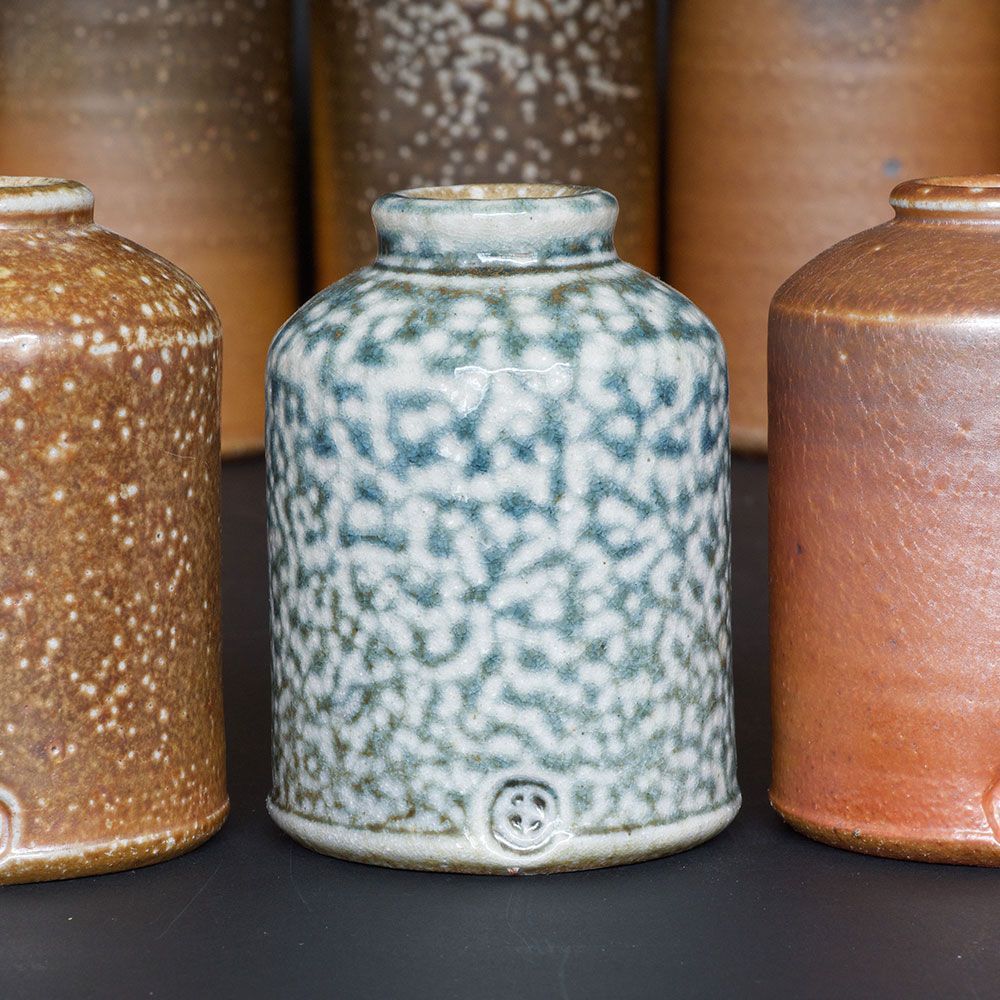
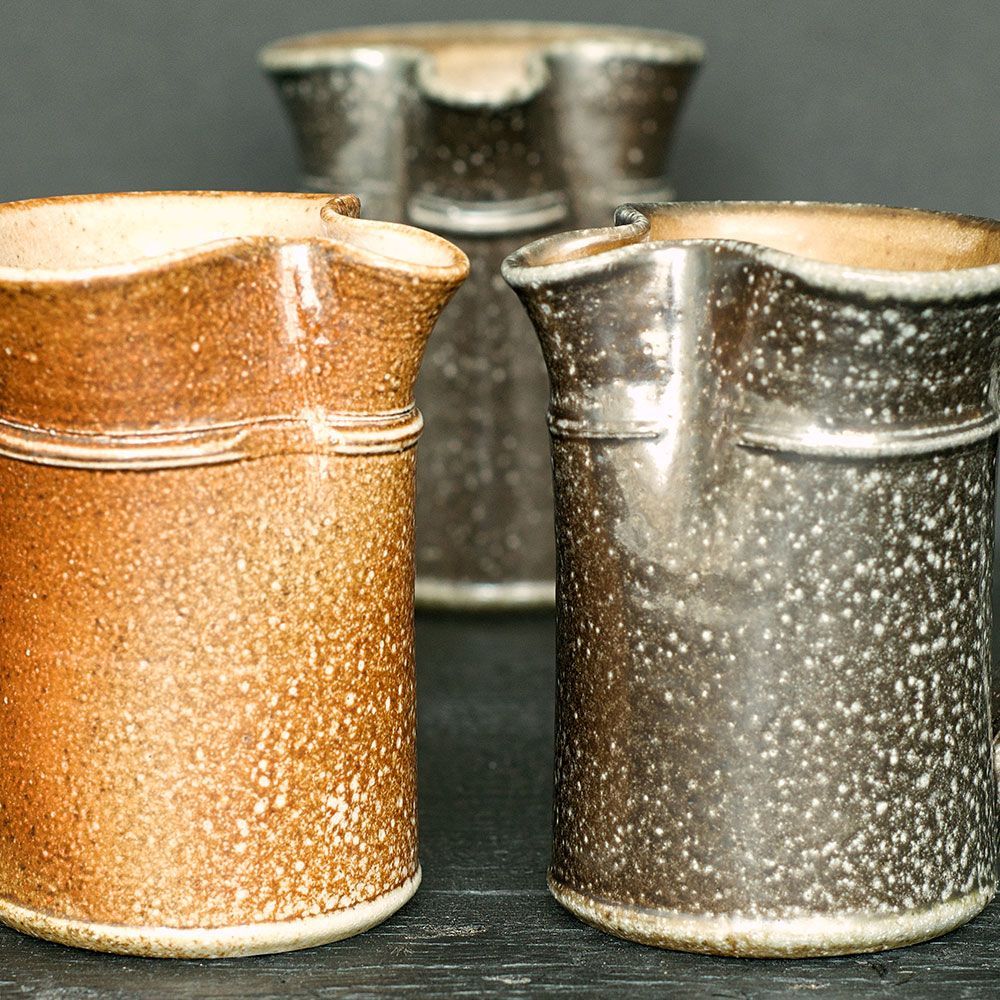
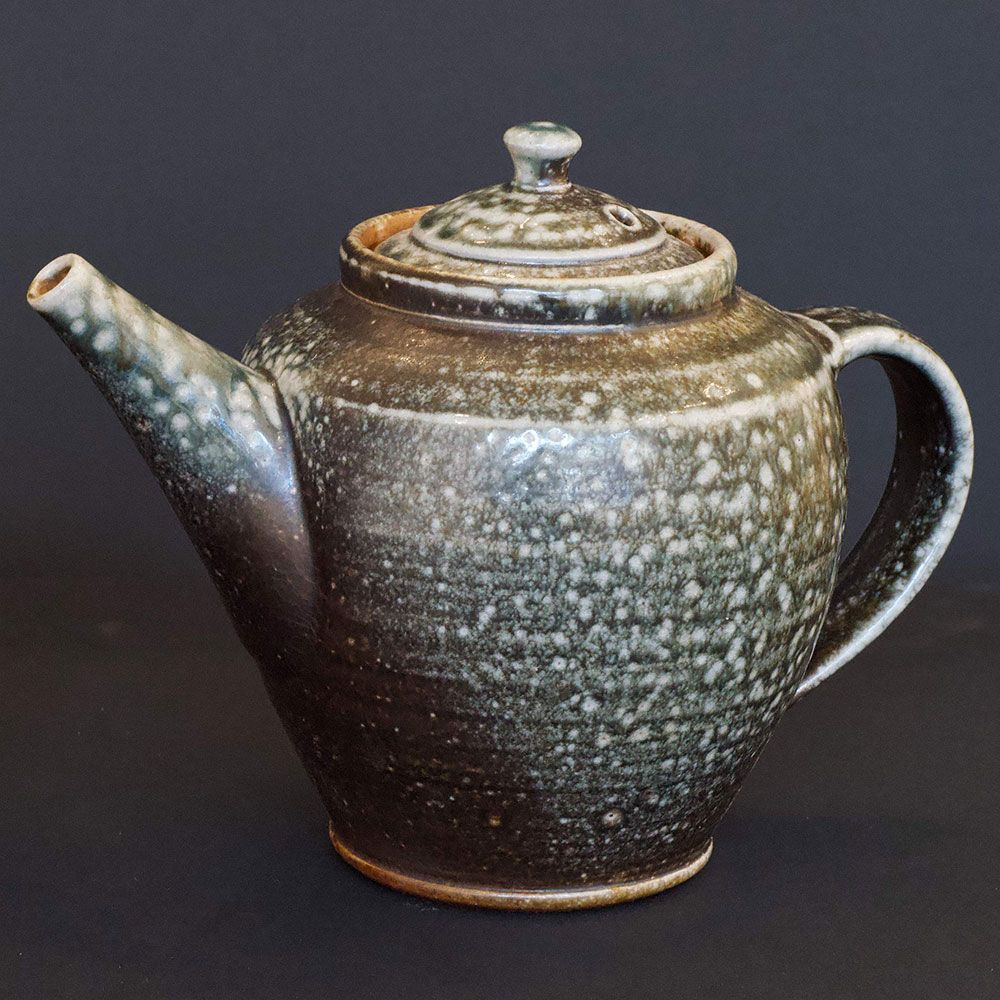
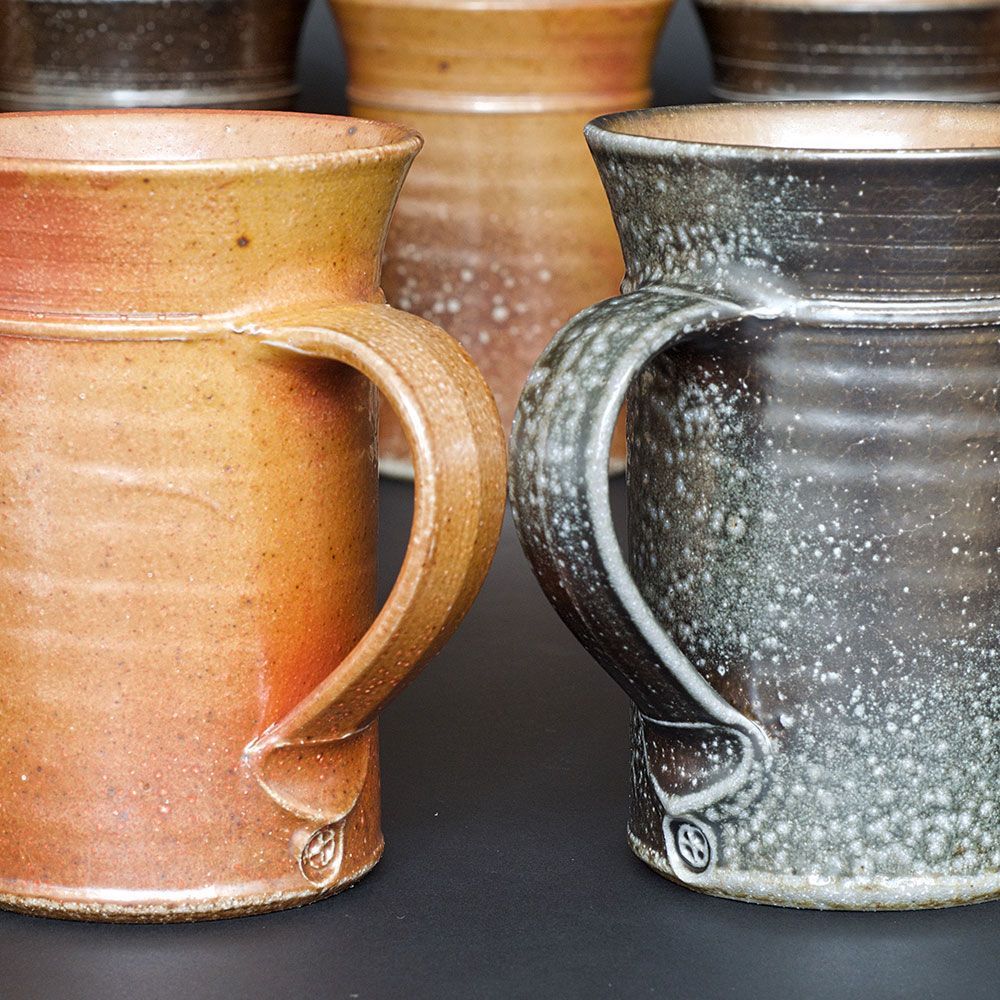
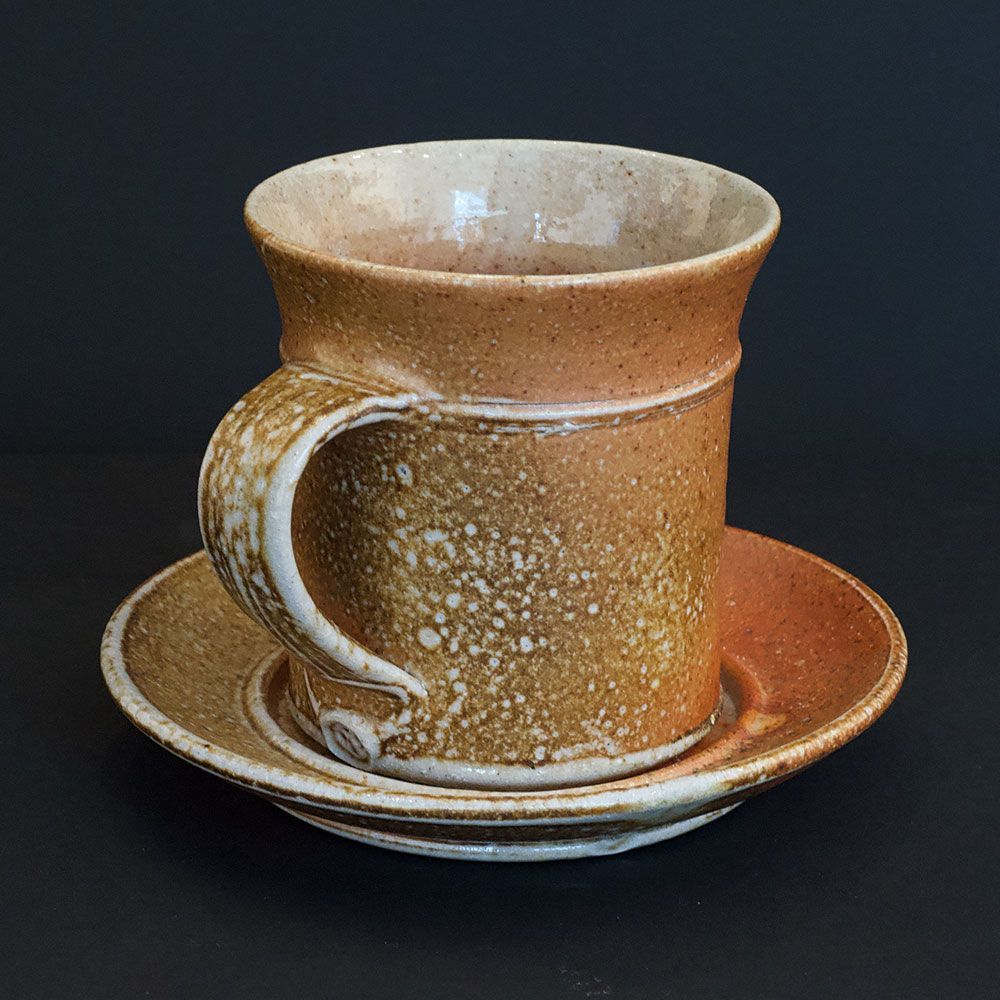
The unique characteristics that can only be achieved when the kiln is fired using wood are especially interesting to me. From the long flames, leaving their marks on the wares as they find a way through the carefully packed chamber, to the natural oscillation of atmospheres as the fire responds to each stoke combine to play their part in adding character to each piece.
My intention is to create pieces that share an ordered familiarity, expressing their individuality though their exposure to flame and vapour during the firing.
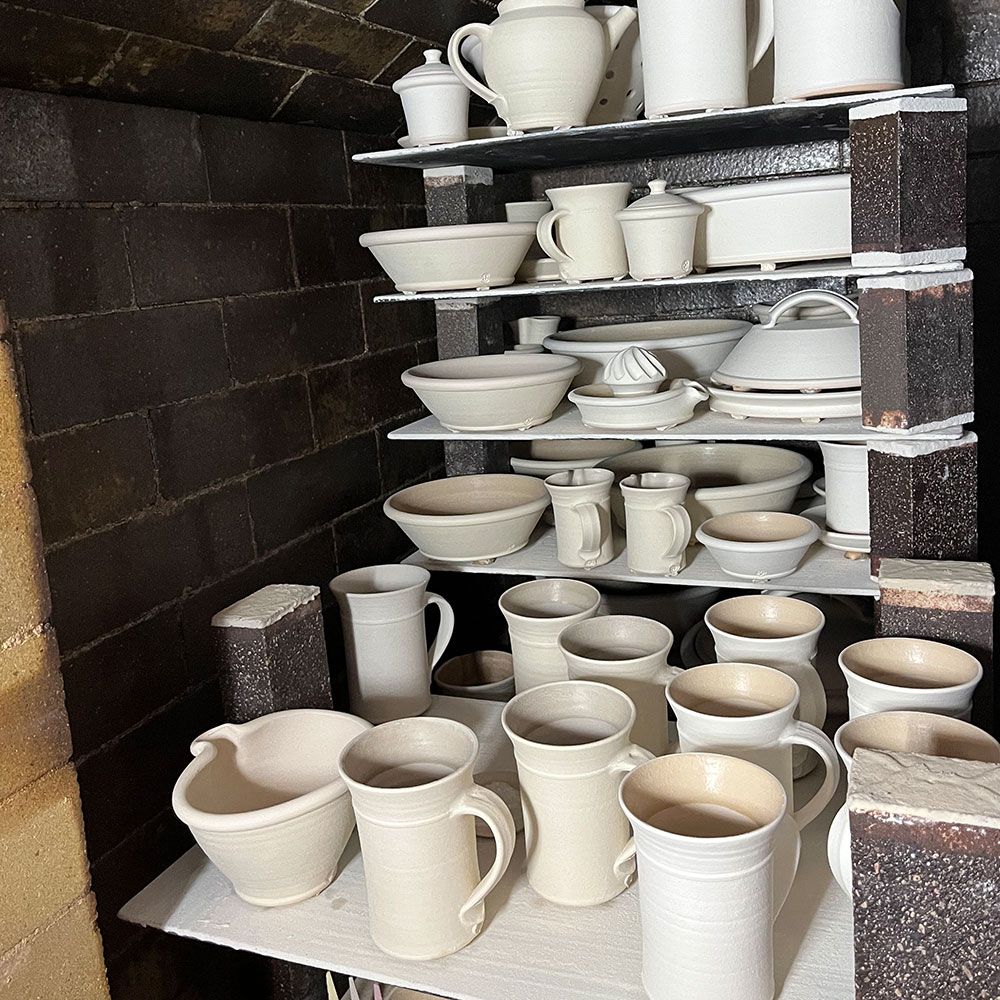
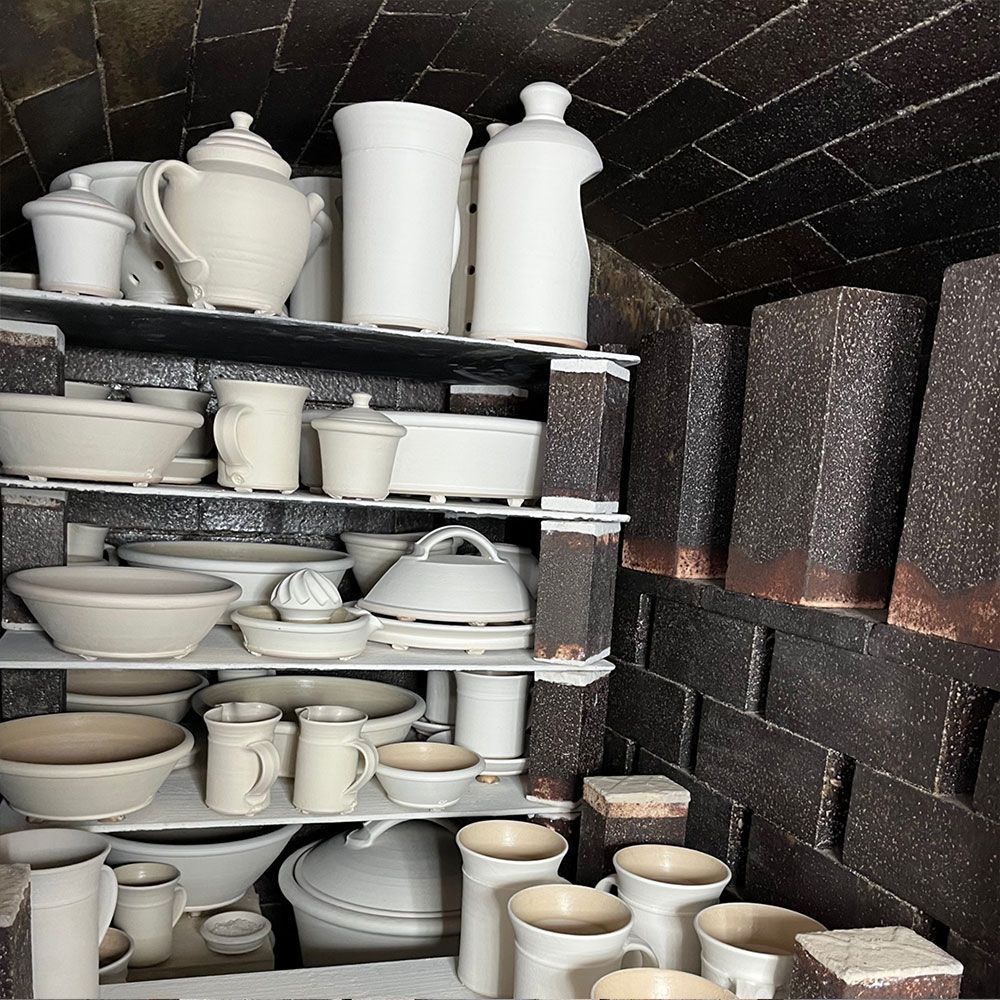
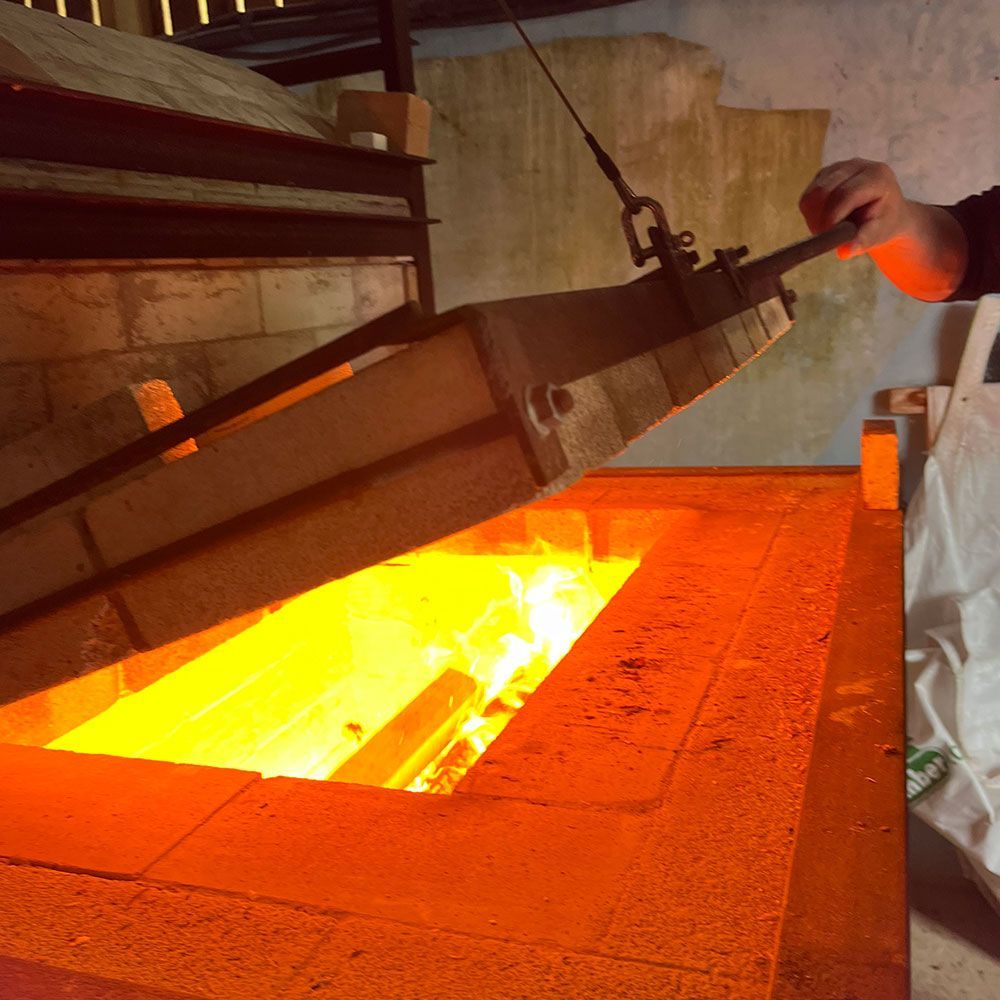
My sprung arch down draft kiln is fired using larch and spruce offcuts from a local sawmill and willow from a local cricket bat manufacturer. In order to fully utilise the qualities of sodium as a flux, salt is introduced to the pieces before the firing, with seawater being used to make the salt slips. I place tiny pots of sea salt throughout the chamber as the kiln is loaded, and also in small quantities during the latter stages of the firing. In all, around 3kg of salt is added at various stages. Additions of different ball clays and locally sourced materials to my own porcelain slips, flashing slips and Shino glazes add to the nuance, subtlety and warmth that can only be achieved when firing with wood and salt.
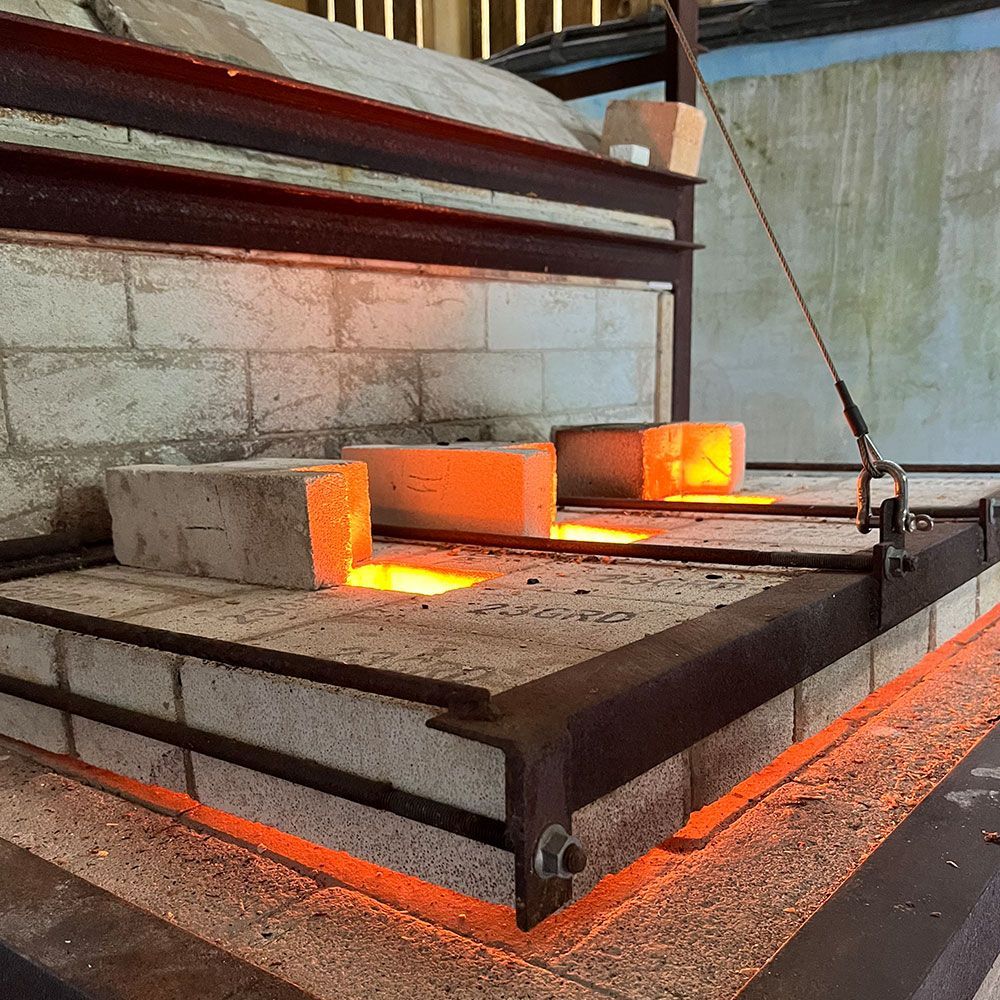
After an initial biscuit firing, work is slipped and glazed before being fired. The efficiency of a Boury box enables me to gently and easily reach Orton cone 10 in 17 hours. The kiln is then crash cooled to around 1050°C before it is clammed up and left for 4 days to cool.
Preparing and Firing the Kiln
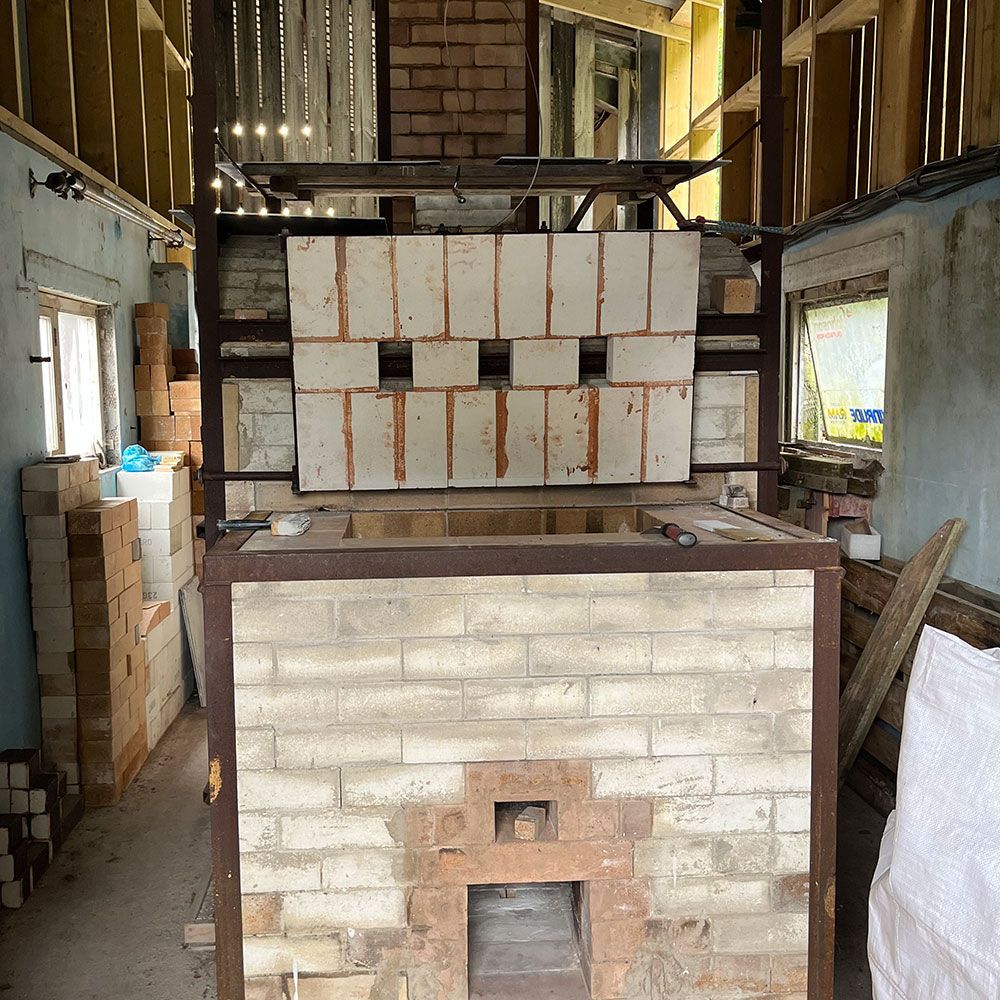
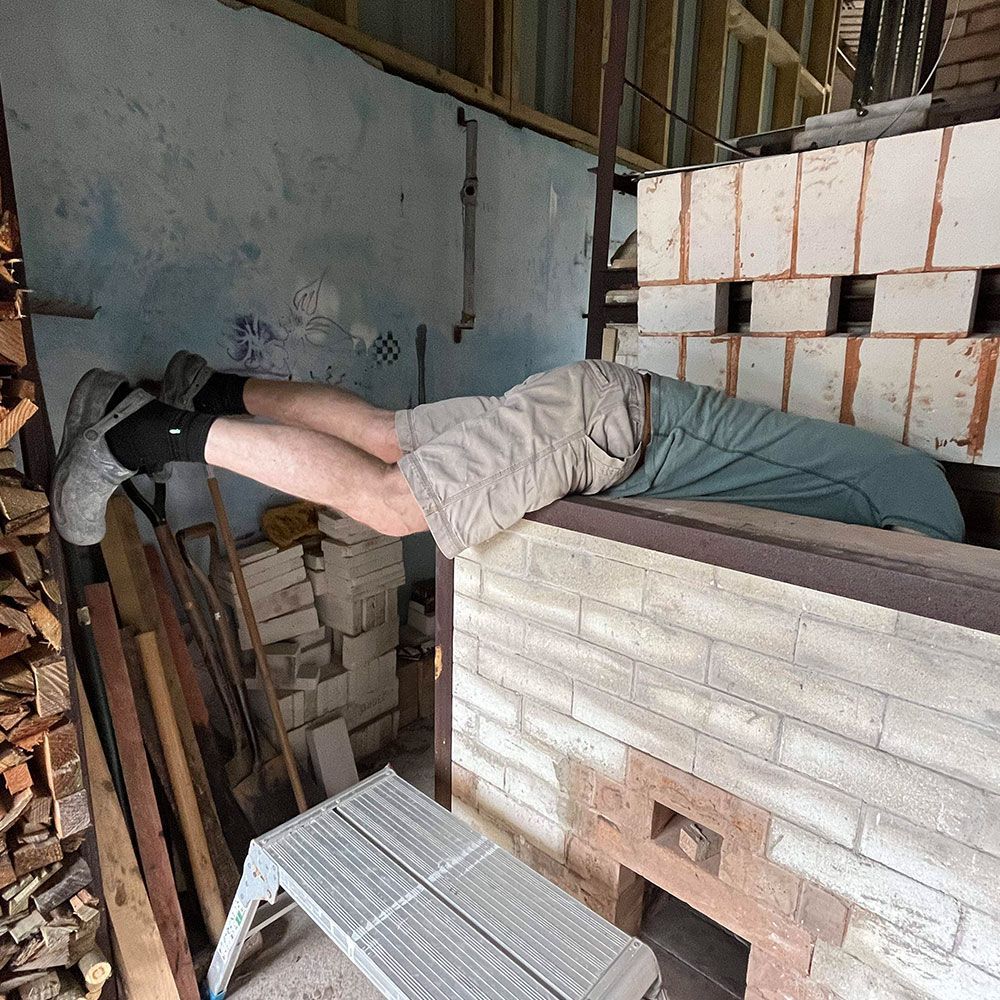
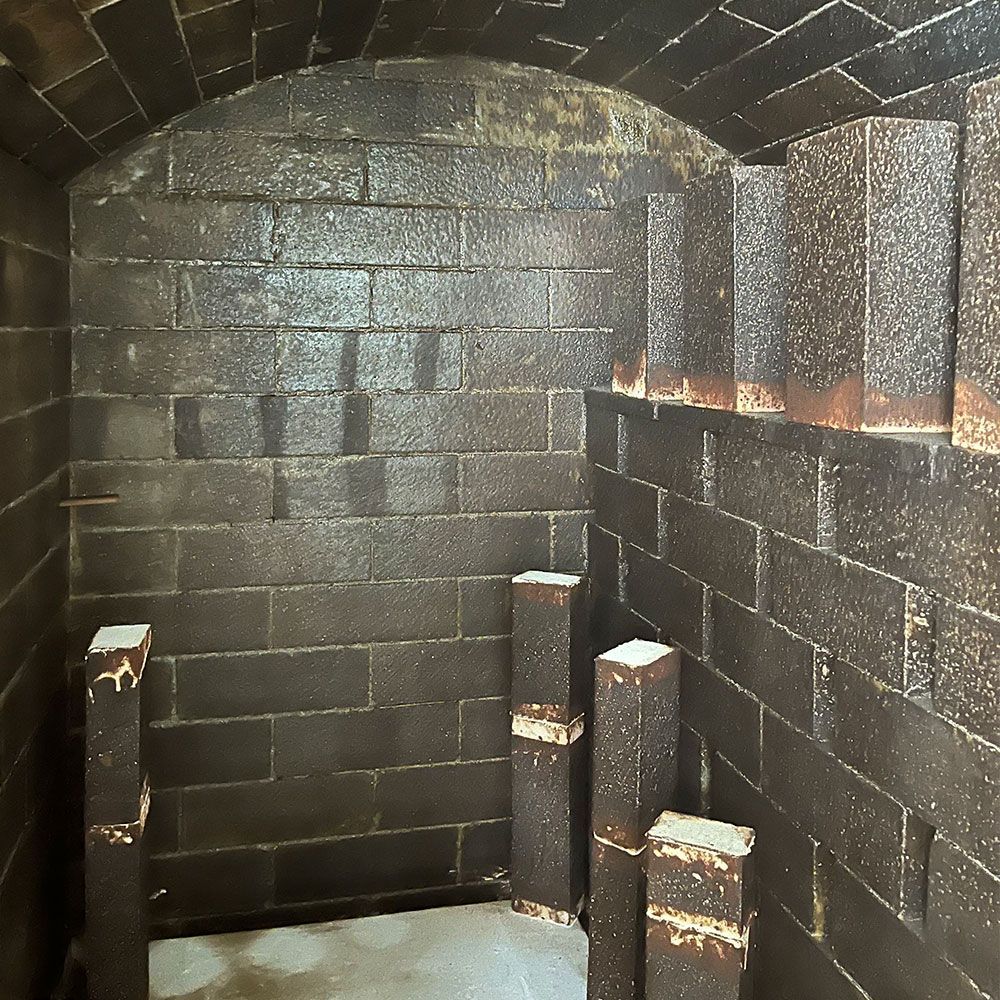
Building the Kiln
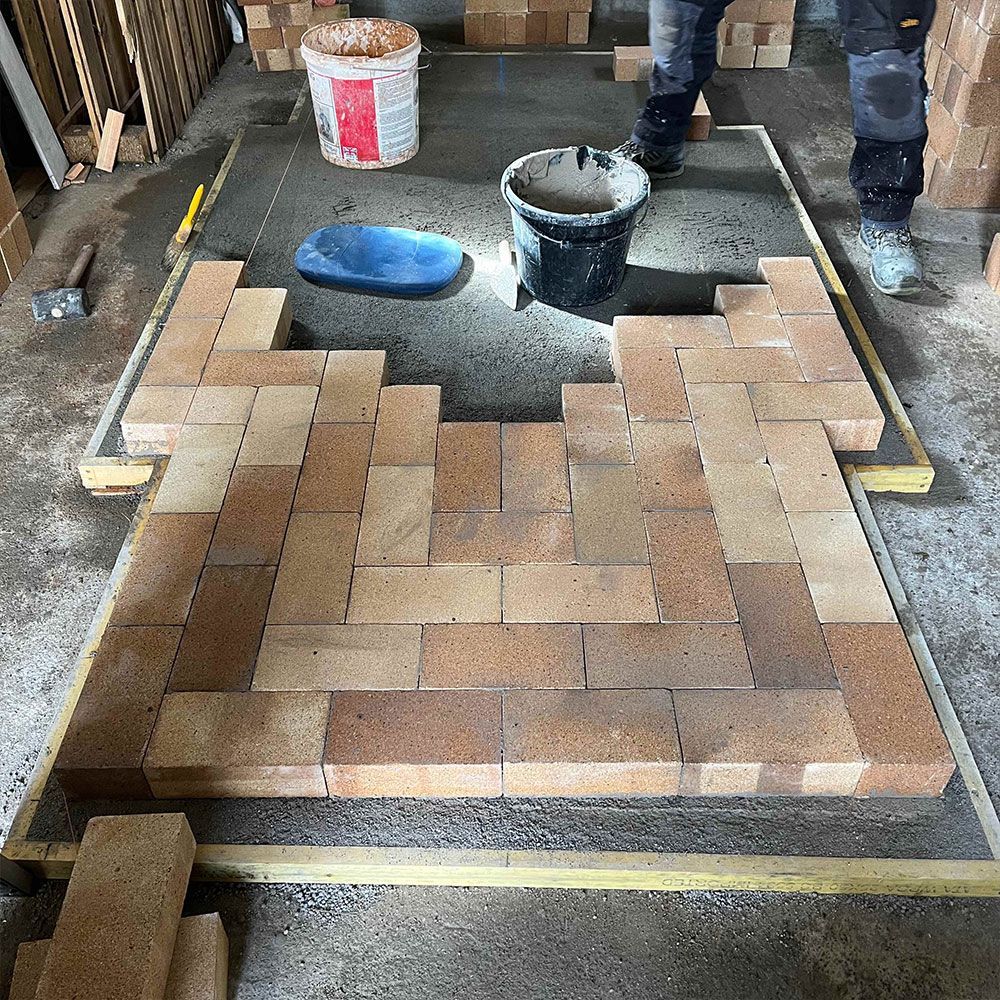
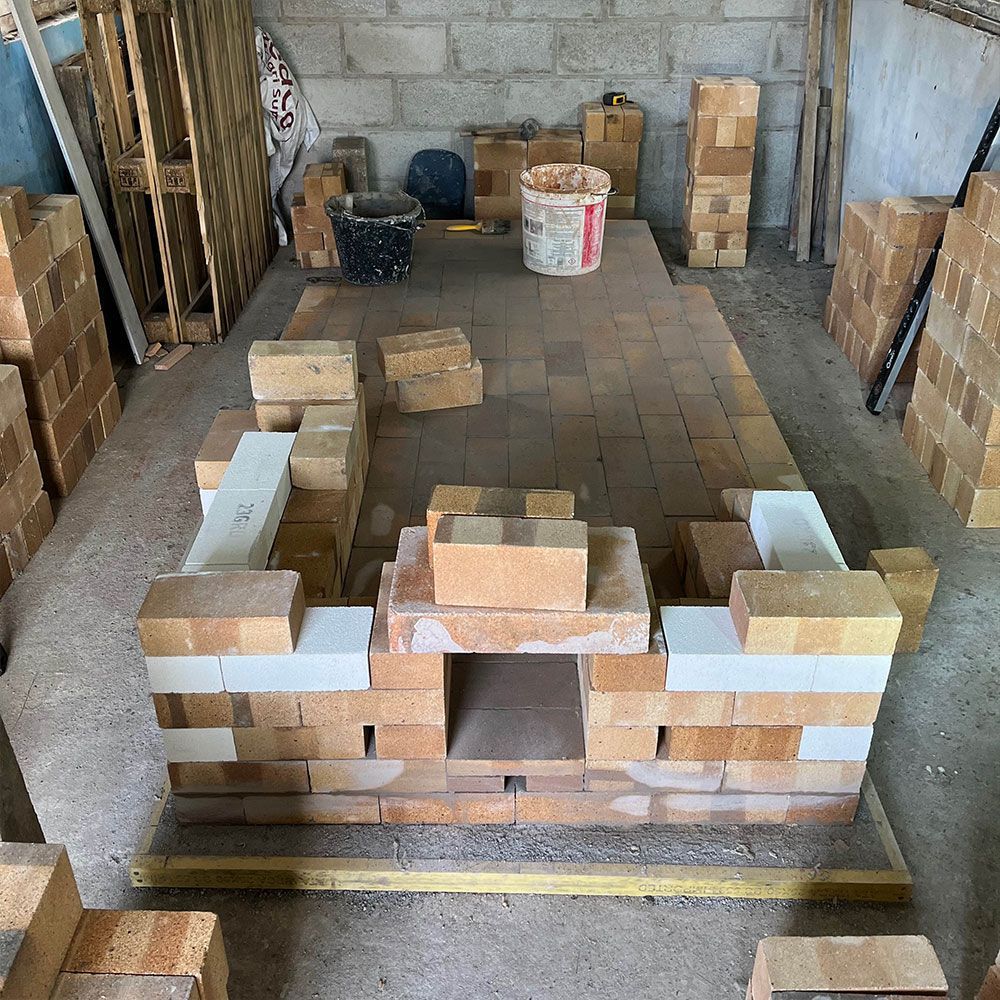
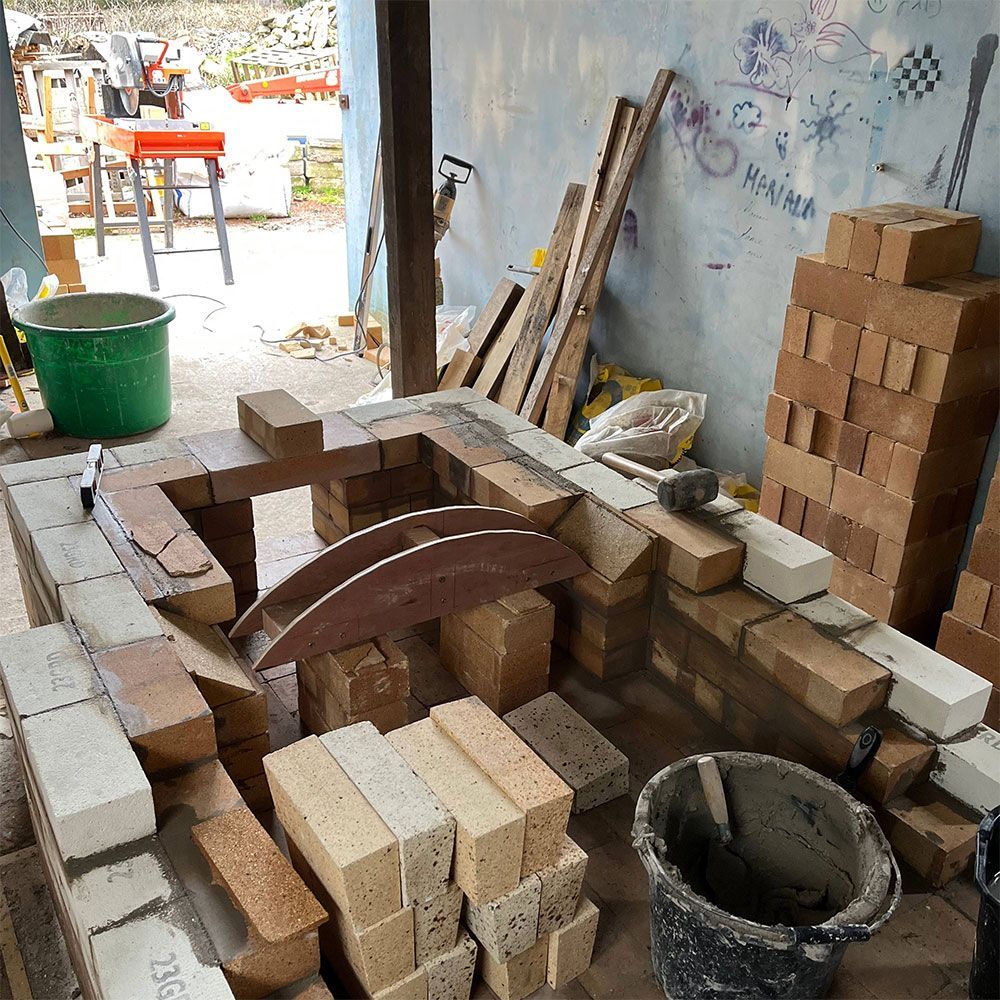
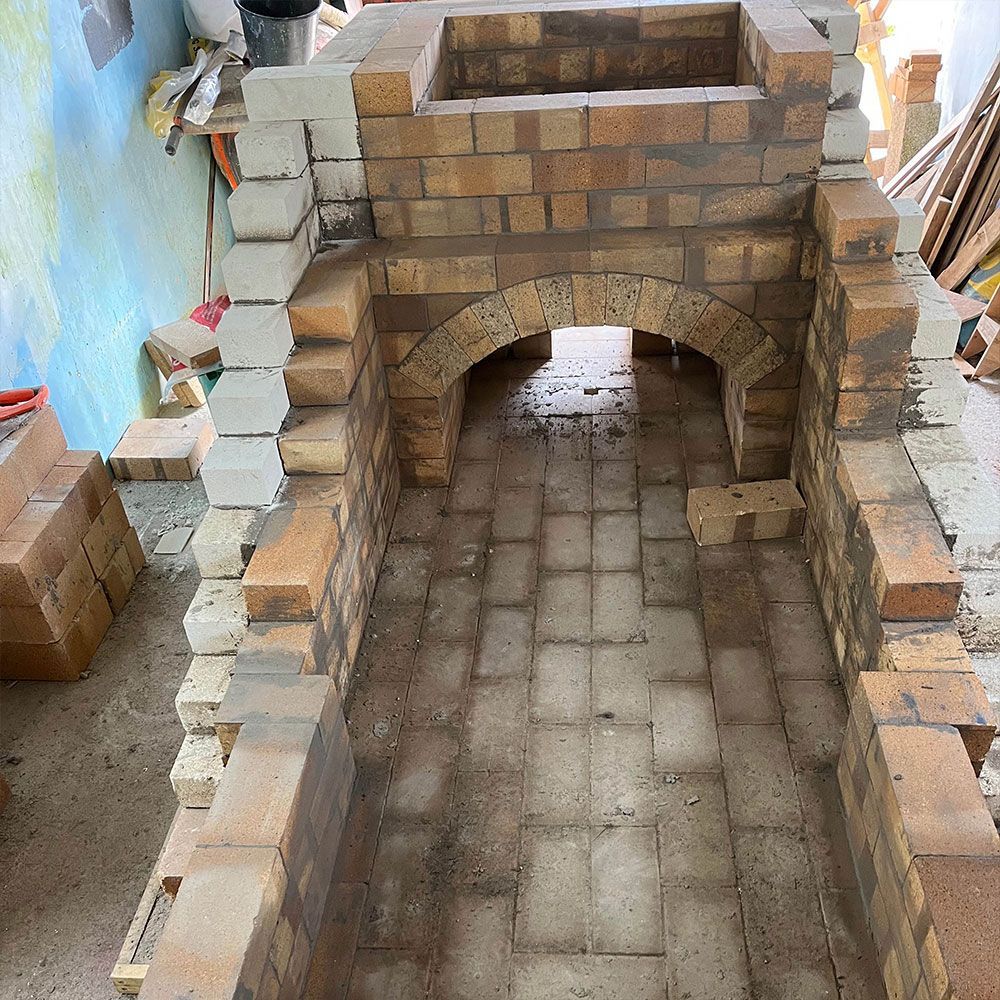
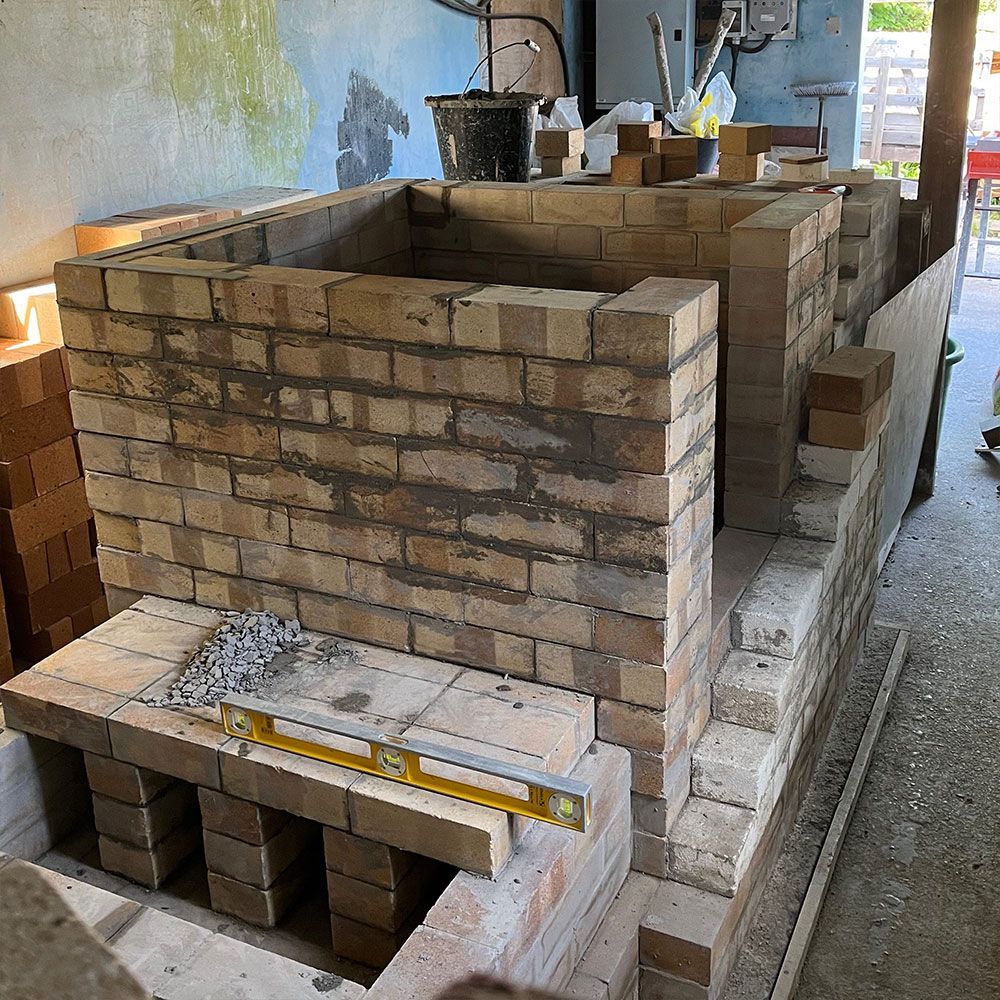
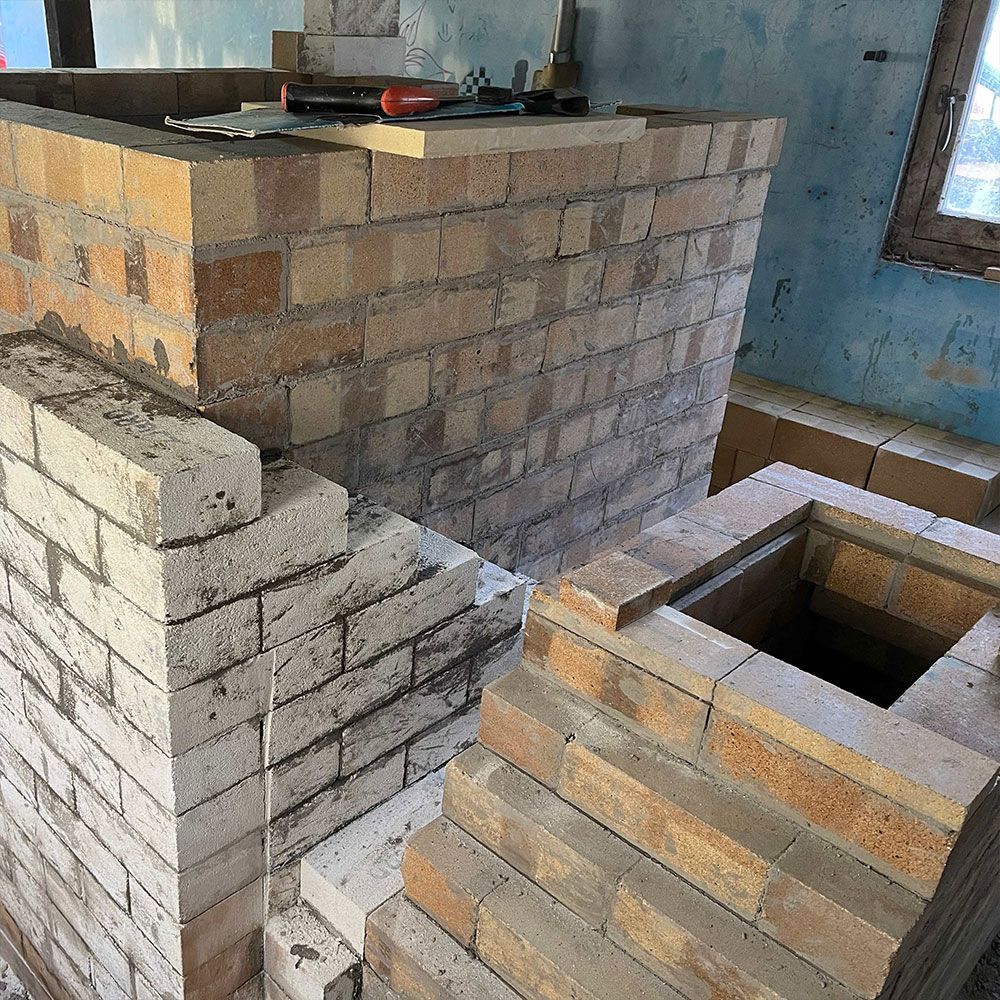
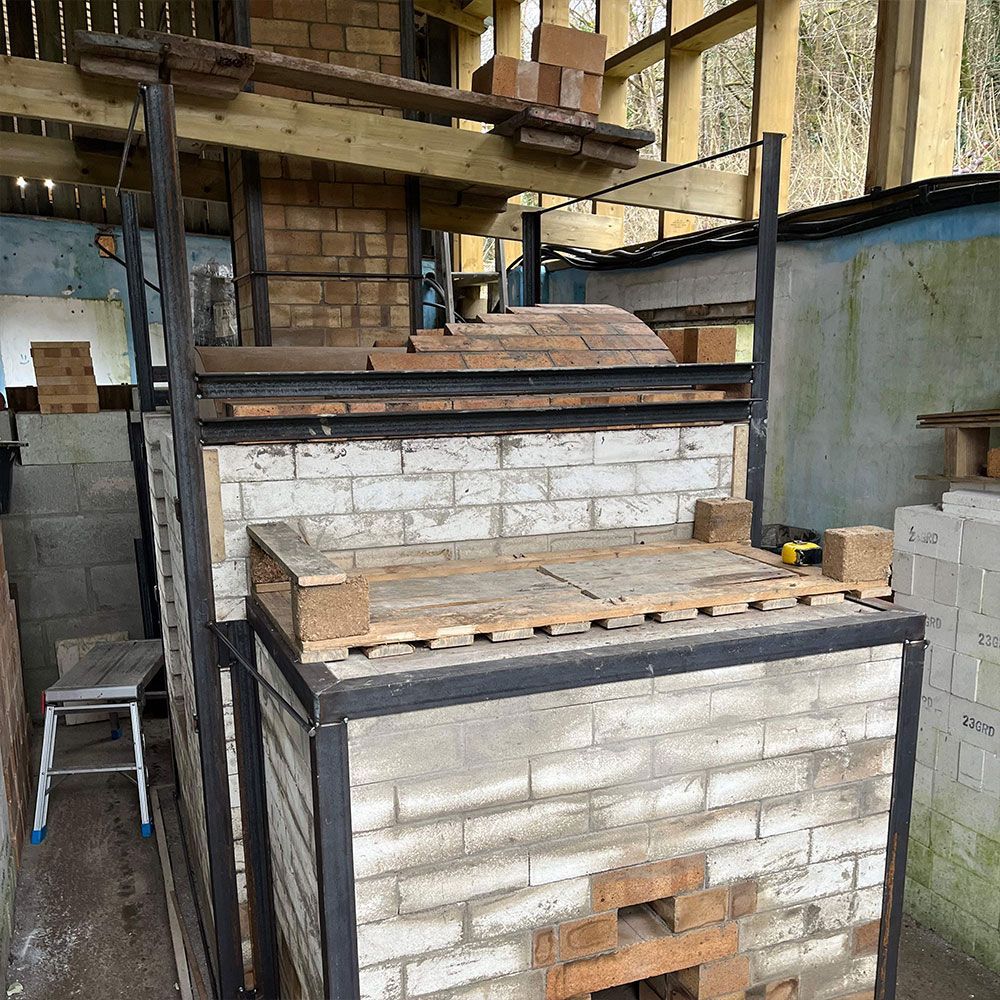
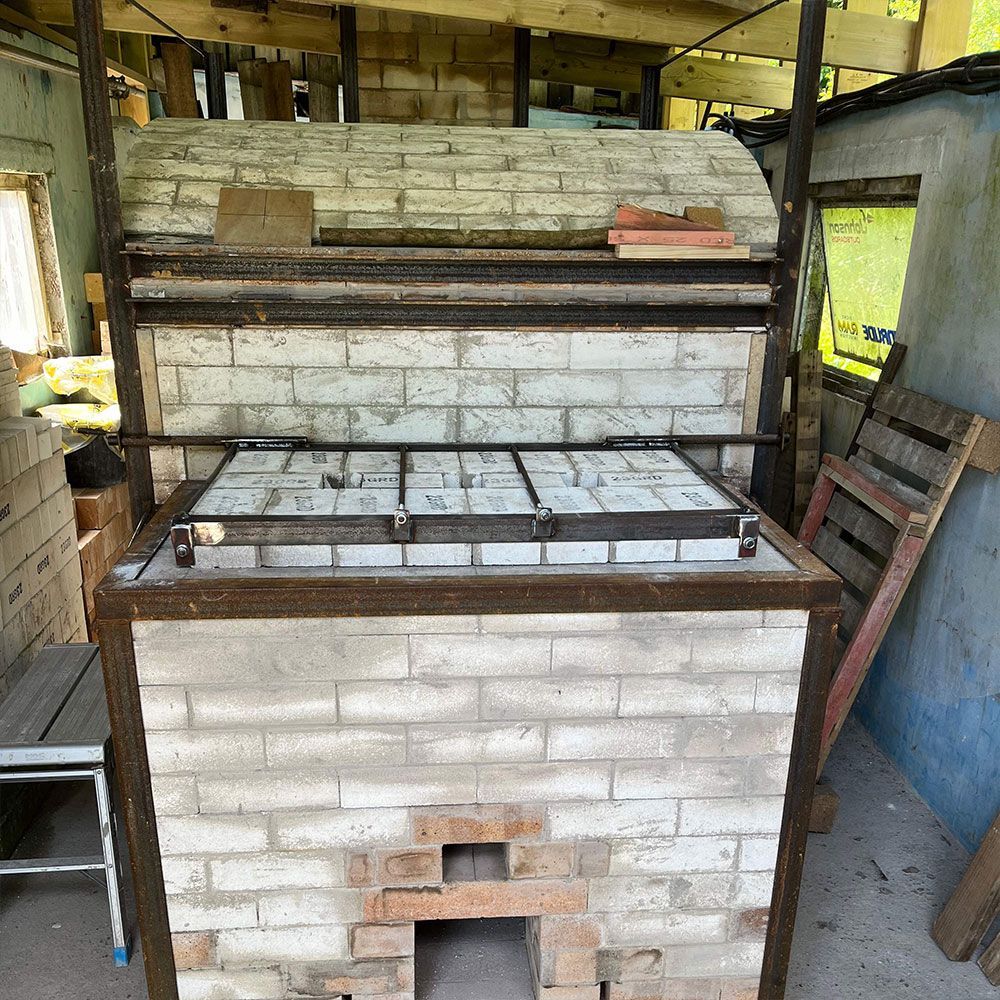
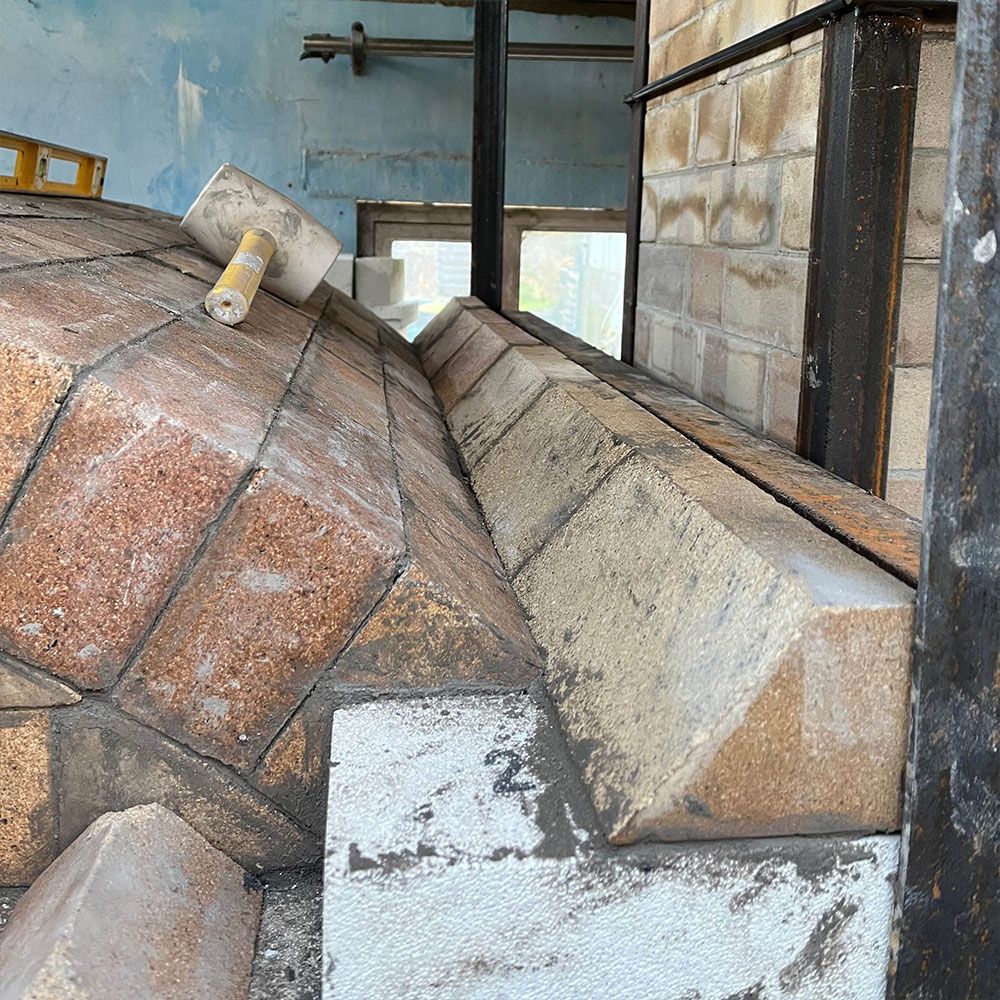
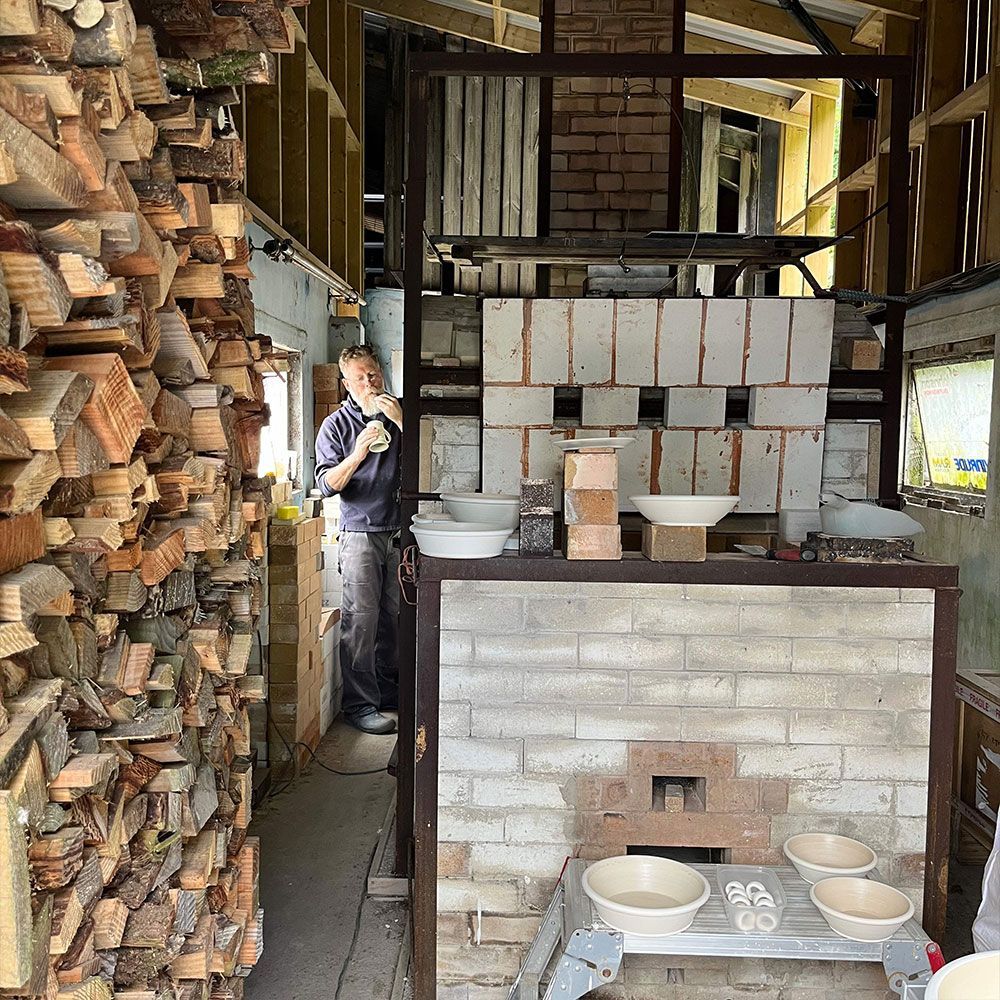
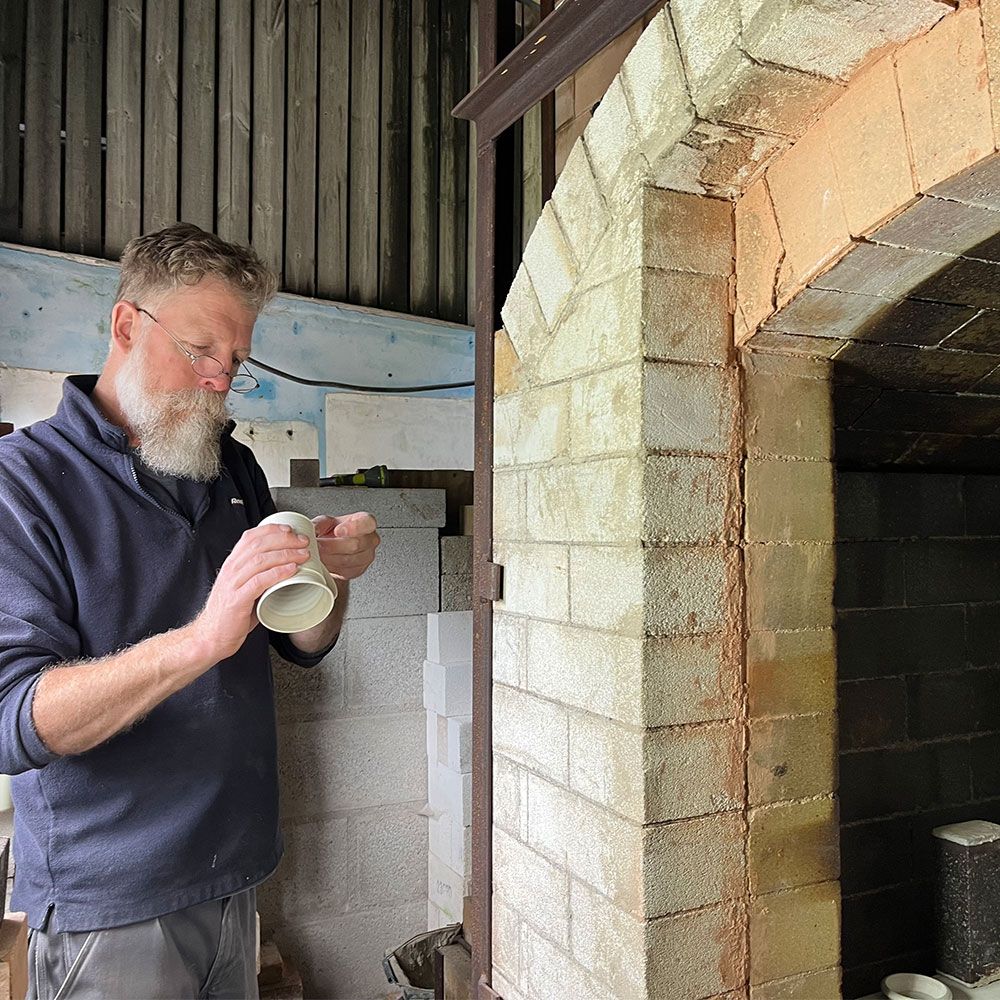
My wood fired salt kiln is built using 42% alumina heavy bricks encased in a second skin of 23GRD HTIs. For the arch between the fire box and the chamber I used 60% alumina heavy fire bricks.
I have adapted a kiln design that I saw in a book called “Laid Back Wood Firing” written by the Australian potter Steve Harrison. An amazing book that I would highly recommend.
I utilised Steve’s brilliant idea of a top loading Boury box to provide the most efficient engine for my kiln.
For my work I wanted a kiln with more of a down draught than cross draught effect. I built flue exit channels below the floor of the chamber that, once covered with a chequer, force the flames and gases below the bottom shelf of each bung.
The chamber is roughly 1mx1mx1m with an arch on top
The chimney is 5.5m tall and narrows to 9"x9" internally after 3.5m.
I want to thank my good friend and fellow potter Brian Dickenson for all his help, encouragement and support. Brian’s counsel has been invaluable.
Gallery